The Big Ideas Lab at Duke is Shaping the Future of Medical Wearable Technology
By Hadi Abdul and Sreeja Appala
Advancements in medical wearable technology have improved the lives of millions of patients. To understand the research behind these life-saving devices, we spoke with Dr. Jessilyn Dunn, Associate Professor of Biomedical Engineering and principal investigator of the BIG IDEAs Lab at Duke University.
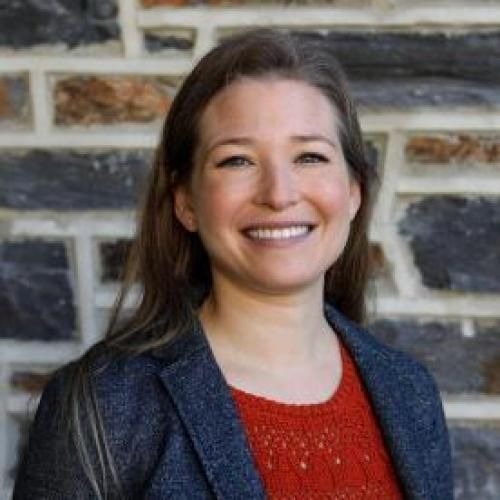
Above: Dr. Jessilyn Dunn, Associate Professor of Biomedical Engineering at the Pratt School of Engineering. Photo courtesy of Duke University Department of Biomedical Engineering.
For Dunn, medical wearable research is personal. “I was interested in biomedical engineering from a young age,” Dunn explained. Her grandmother had an artificial heart valve due to a childhood illness that damaged her heart. Consequently, Dunn’s grandmother faced many challenges. These valves do not last forever – they calcify over time and must be replaced. After a certain age, many patients are no longer eligible for surgery. Dunn grew up wondering what could be done to prevent calcification so that a person’s life would not have a countdown attached to it.
As an undergraduate at Johns Hopkins University, Dunn worked in a vascular aging lab, learning about valve calcification and endothelial cell dysfunction. Endothelial cells line the valves, and when these cells begin to fail, they trigger cascades of inflammatory markers that turn genes on and off, setting off a chain of downstream problems. Dunn’s curiosity about how complex signals shape health motivated her to explore deeper questions in systems biology and multiomics work. Dunn studied large biomolecular datasets to understand why some cells move toward dysfunction while others remain healthy.
Eventually, Dunn’s studies led her towards wearable technology. Her postdoc mentor encouraged her to explore the field, stating that engineers were needed to interpret and structure the new types of data that wearables could generate. Dunn saw the potential for a low-cost and accessible way to monitor human health across populations. Wearables offered the chance to measure real physiology outside the lab, with more frequency and less cost than traditional omics-based approaches. These ideas were the spark from which her research group, the BIG IDEAs Lab, emerged.
Dunn is currently mentoring students and postdocs of various levels in her lab. “Seeing how you all learn and innovate, just brings passion to the work. It's so much fun for me.” The lab collaborates with researchers at Duke and beyond, spanning academia, industry, and government. Dunn’s group leans on collaborators for translation and policy work in a variety of different ways. The lab works with industry partners as well as clinicians at Duke Hospital who are seeing their patients day-to-day. “Teamwork is critical to making sure that we see all angles,” Dunn emphasized.
We also spoke with Lauren Lederer, a PhD candidate in the BIG IDEAs Lab, who said she chose biomedical engineering because she “could immediately make an impact with patients.” She explained that the BIG IDEAs Lab’s strength comes from the diversity of work happening within it. Research there feels connected to real clinical need because the team studies sensors, digital biomarkers, data modeling, and patient experiences all at once.
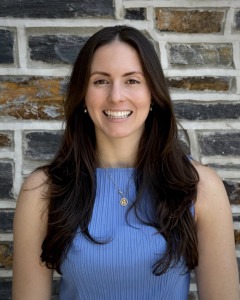
Above: Lauren Lederer, PhD candidate in the BIG IDEAs Lab. Photo courtesy of the BIG IDEAs Lab at Duke University.
Lederer contributes to Project VitalWave, an initiative focused on open sourcing wearable tools so that researchers, clinicians, and the public can use and improve them. VitalWave reflects a shared belief in the lab that science progresses faster when others can test and build on your work. “We are probably unique in how close we are in contact with industry,” Lederer said. The lab regularly works with companies, advisory boards, and health technology groups to understand what is being built, what is needed, and how new findings could fit into products used by the public. That closeness helps ensure that ideas developed inside the lab have a path toward real patient impact.
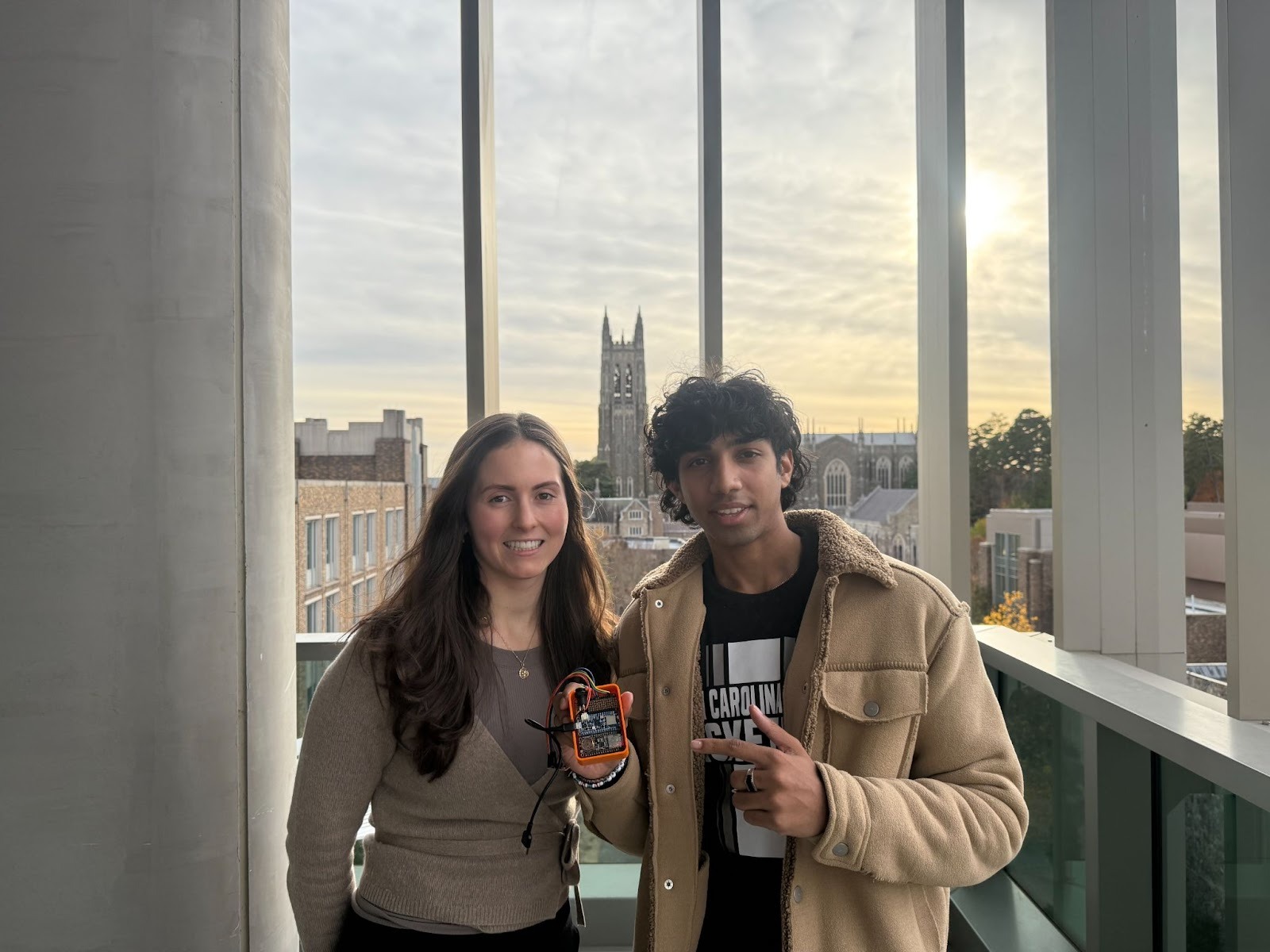
Above: Lauren Lederer (left) and Hadi Abdul (right) hold a medical device project in the BIG IDEAs Lab.
Lederer also discussed one of the most difficult parts of the field: implementation. It is one thing to design a device, algorithm, or model. It is another to make it function in a real-world medical or field setting. “Some of my projects look at what it is like to actually implement these devices in an actual medical setting,” she said. Lederer studies how clinicians use them, what information is useful or overwhelming, and what barriers prevent adoption. Her emphasis on the bridge between research and clinical practice highlights how important translation is to the BIG IDEAs Lab.
Witnessing her grandmother’s struggle with heart valve limitations early in life shaped Dr. Jessilyn Dunn’s desire to address solvable problems and improve medical wearables. Her commitment to transforming clinician-scientist collaboration drives an innovative culture in the BIG IDEAs Lab that will shape the next generation of medical device engineering.
Hadi Abdul is a senior at the North Carolina School of Science and Mathematics.
Sreeja Appala is a junior at the North Carolina School of Science and Mathematics. Sreeja is interested in tennis, photography, and reading.